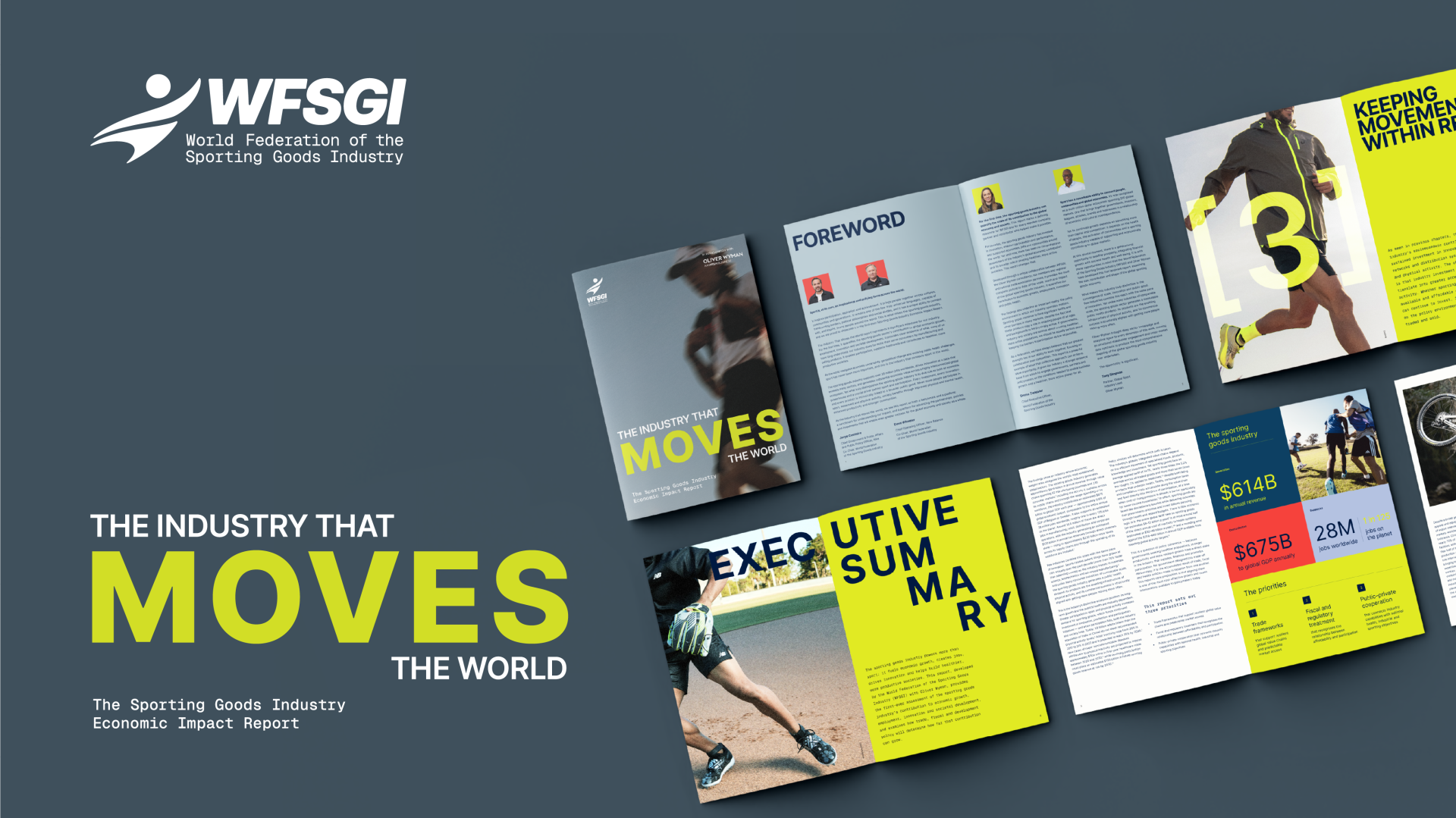
Landmark Report: Sporting Goods Industry Delivers $675 Billion in Global GDP and Supports 28 Million Jobs Worldwide
First-ever global economic impact assessment ranks the sporting goods industry alongside the world’s most established global sectors supporting economic growth, innovation, jobs and healthier societies by enabling participation in sport and physical activity.
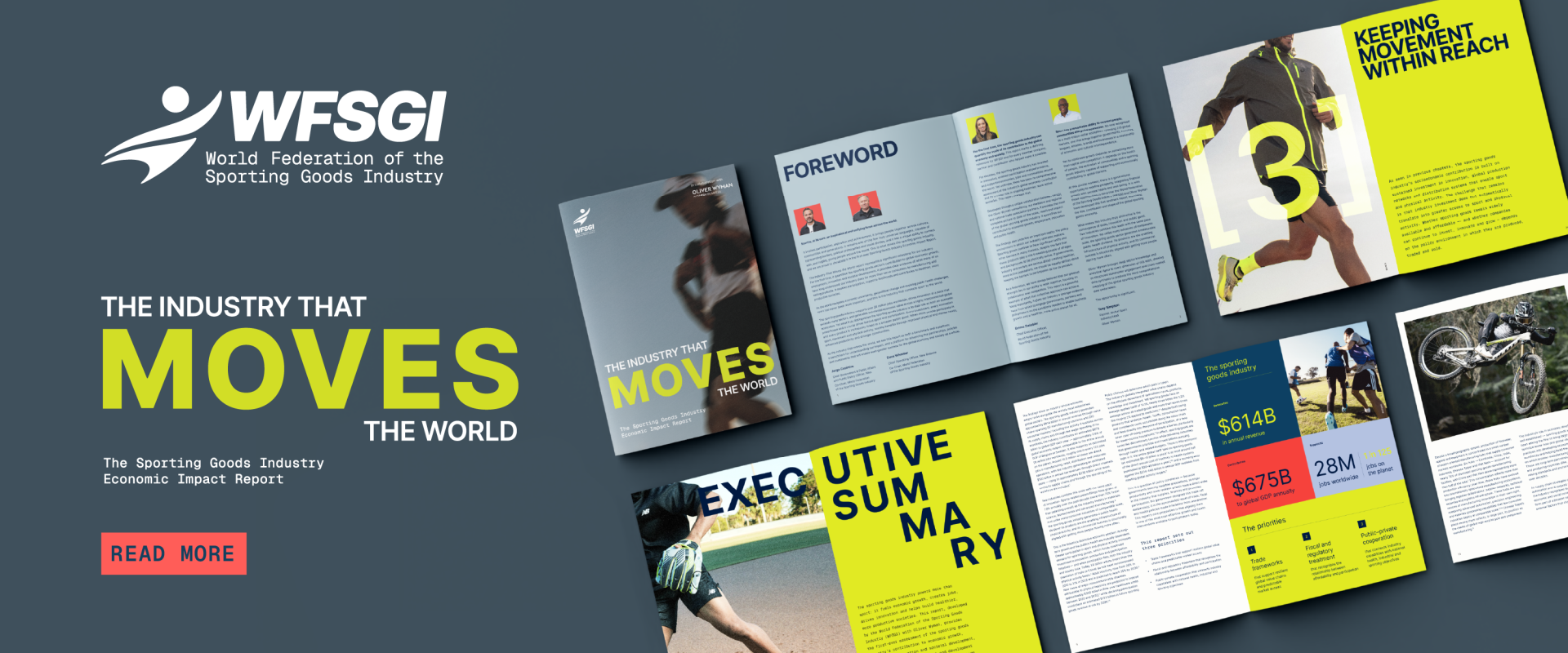
Geneva, 17 September 2026 - The Industry that Moves the World, the first-ever assessment of the sector's economic footprint, was released today by the World Federation of the Sporting Goods Industry (WFSGI) in collaboration with Oliver Wyman, a Marsh business.
According to this landmark report, the sporting goods industry contributes an estimated $675 billion to global GDP each year – roughly 0.6% of world economic output and comparable to the entire annual GDP of Belgium and supports 28 million jobs globally, one in every 125 jobs on the planet.
The report provides a detailed breakdown of the industry's economic footprint across revenue, employment, tax contribution and innovation, alongside the trade, fiscal and health policy environment it operates. It also highlights how every stage of physical activity and sport, from grassroots participation and professional competition to sports tourism, depends on the products, sponsorship and innovation the industry provides.
"For decades, our industry has invested in innovation, enabled participation and performance, and supported economies, jobs and communities around the world. Yet until now, there has been no comprehensive assessment of the industry's global economic contribution,” said Emma Zwiebler, Chief Executive Officer of WFSGI. “This report changes that – showing we’re not only an economic powerhouse, but good for society, delivering a public health dividend by getting more people moving more often."
Not-to-miss key findings:
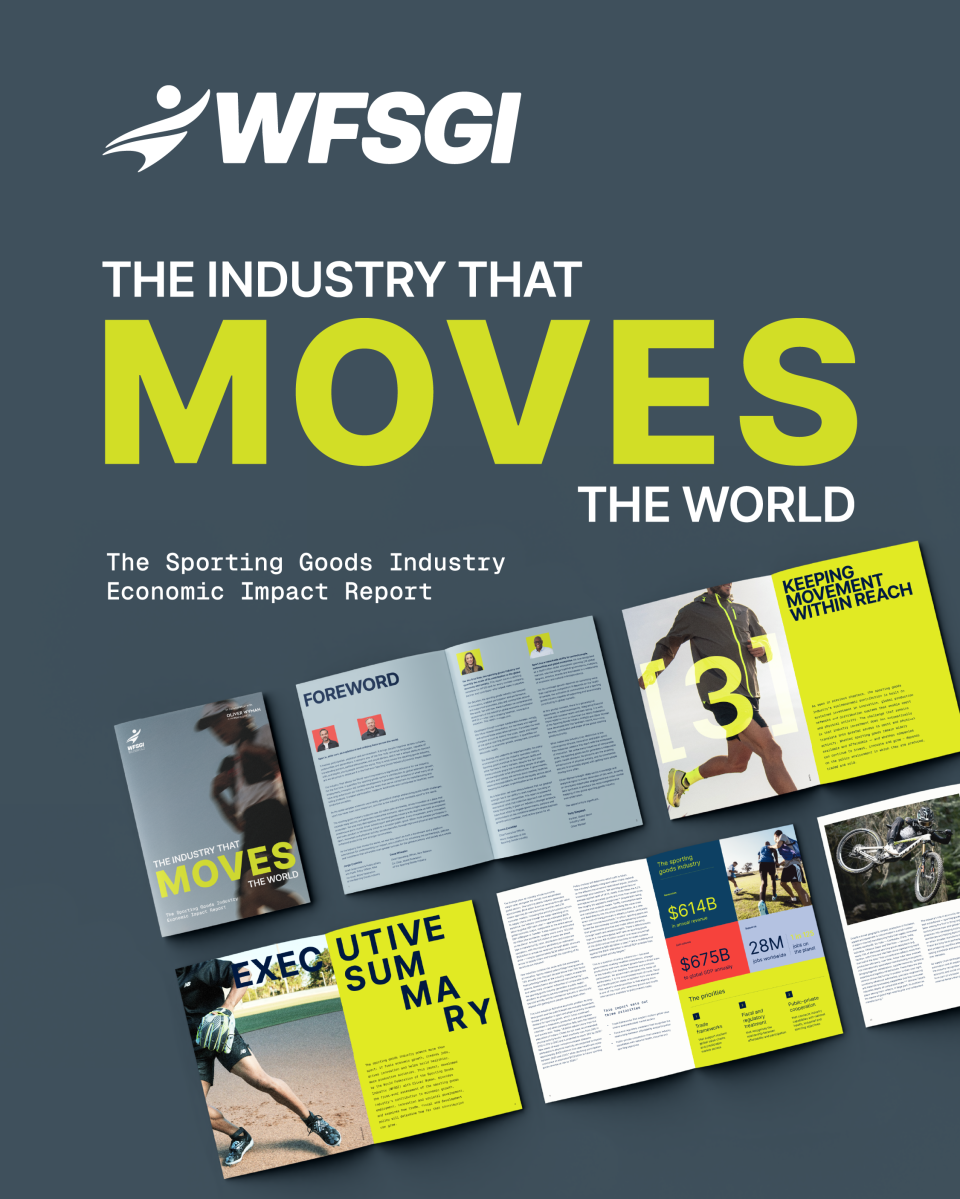
- The total economic contribution of the sporting goods industry is an estimated $675 billion in GDP annually, considering the supply-chain and workforce wage-spending effects.
- The sporting goods industry supports 28 million jobs in total, one in every 125 jobs on the planet.
- The global sports economy is a $2.3 trillion market projected to reach $3.7 trillion by 2030. This projected growth is fuelled in part by grass-roots participation and elite-level competition worldwide, both of which are underpinned by the industry.
- The industry generates an estimated $120 billion in direct tax revenue annually, rising to approximately $230 billion including supply-chain and wage-spending effects.
- An innovative industry – sports-related patent filings have grown 7.6% annually over the past decade – more than 70% faster than patenting overall.
- Sporting goods companies contributed an estimated $5 billion in cash sponsorship in 2024, in addition to product and value-in-kind support and remain the largest single source of athlete sponsorship of any industry.
Key Economic Priorities Outlined
The report states that aligning the following three priorities is one of the most cost-effective growth
and health interventions available today:
- Trade frameworks that support resilient global value chains and predictable market access
- Fiscal and regulatory treatment that recognizes the relationship between affordability and participation
- Public-private cooperation that connects industry capabilities with national health, industrial and sporting objectives.
Sporting goods face an average applied tariff of 14.1% nearly three times the rate applied across all traded goods. The report recognises the penalty is rooted in the industry’s own sophistication – the technical, multi-country production that makes sporting goods effective for health and performance is the same characteristic that exposes it to repeated tariff charges as materials, components and finished products cross borders.
What makes the products good for people makes them expensive to trade and in turn, discretionary items in many households. “At a time when physical inactivity is rising globally, we should be looking at how policy can make sport more accessible for people of all ages and backgrounds," said Zwiebler. “Governments, industry and society all have a role to play in aligning policy to keep barriers to
participation as low as possible."
Not Simply Another Player
WFSGI Co-Chairs Jorge Casimiro and Dave Wheeler see this report as both a benchmark and a platform for the sporting goods industry:
Jorge Casimiro, Co-Chair of WFSGI and Chief Government & Public Affairs and Public Policy Officer at Nike: “This report provides compelling evidence that the sporting goods industry is not simply another player in the global economy, but one of the world's great economic and social success stories. What truly distinguishes our industry is its dual role as both an economic powerhouse and a crucial driver behind sport and participation."
Dave Wheeler, Co-Chair of WFSGI and Chief Operating Officer at New Balance: "Every investment, every innovation and every product is intrinsically linked to a broader public good. When more people participate in sport and movement, society benefits through improved physical and mental health, enhanced productivity and stronger communities."
Tony Simpson, Partner, Global Sport Industry Lead, at Marsh’s Oliver Wyman said: “For the first time, we can put a comprehensive economic value on the sporting goods industry and demonstrate the scale of its contribution to the global economy. What stands out from the analysis is not just the industry’s economic footprint, but the relationship between innovation, participation, and public health. The industry’s economic success and participation are closely connected. Greater participation supports industry growth and continued investment in innovation, while also contributing to healthier populations and stronger economies.”
Key Physical Inactivity Facts and Figures
- 31% of adults (1.8 billion people) and over 80% of adolescents do not meet the recommended levels of physical activity.
- If the trend continues, inactivity is projected to reach 35% of adults by 2030.
- The global target is a 15% relative reduction in inactivity by 2030, from a 2010 baseline.
- Physical inactivity is projected to cost public health systems about US$300 billion globally between 2020–2030 (~US$27 billion/year) if levels don't improve.
- WHO recommends at least 150 minutes of moderate-intensity activity per week for adults and 60 minutes per day for children and youth.
- Women are less active than men by an average of 5 percentage points - a gap that hasn't changed since 2000.
- Adolescent girls are less active than boys: 85% vs. 78% not meeting WHO guidelines.
- Read the full WFSGI Physical Activity Impact Report here.
About WFSGI
The World Federation of the Sporting Goods Industry (WFSGI) is the global trade association representing the sporting goods industry, with 150 member companies accounting for approximately 70% of global sporting goods turnover. WFSGI works at the intersection of sport, business and public policy to drive a healthier, more active planet for all. The federation is the Recognised Organisation for Sporting Goods in the Olympic Movement and has Official Relations with the World Health Organisation to support global physical activity goals. www.wfsgi.org
About Oliver Wyman
Oliver Wyman is a business of Marsh (NYSE: MRSH), a global leader in risk, reinsurance and capital, people and investments, and management consulting, advising clients in 130 countries. With annual revenue of $27 billion and more than 95,000 colleagues, Marsh helps build the confidence to thrive through the power of perspective.
For more information, visit oliverwyman.com, or follow us on LinkedIn and X.
Media Contact
Linda Murphy
WFSGI Head of Communications